Artificial Intelligence (AI) has become a cornerstone of modern technology, transforming industries ranging from healthcare to finance.
Building an AI system isn’t a one-time project; it requires a structured development lifecycle, iterative improvements, and a modular approach to ensure adaptability, efficiency, and scalability.
Understanding the AI development lifecycle is essential for businesses and developers to create high-performing, reliable AI solutions that can evolve over time.
AI Development Lifecycle: Iterative Improvements and Modules
In this article, we’ll explore the AI development lifecycle, explain the importance of iterative improvements, discuss modular design, and provide actionable insights for implementing these strategies in real-world projects.
1. Understanding the AI Development Lifecycle
The AI development lifecycle is a structured framework for designing, building, deploying, and maintaining AI systems.
Unlike traditional software development, AI projects often involve complex data workflows, model training, and continuous optimization.
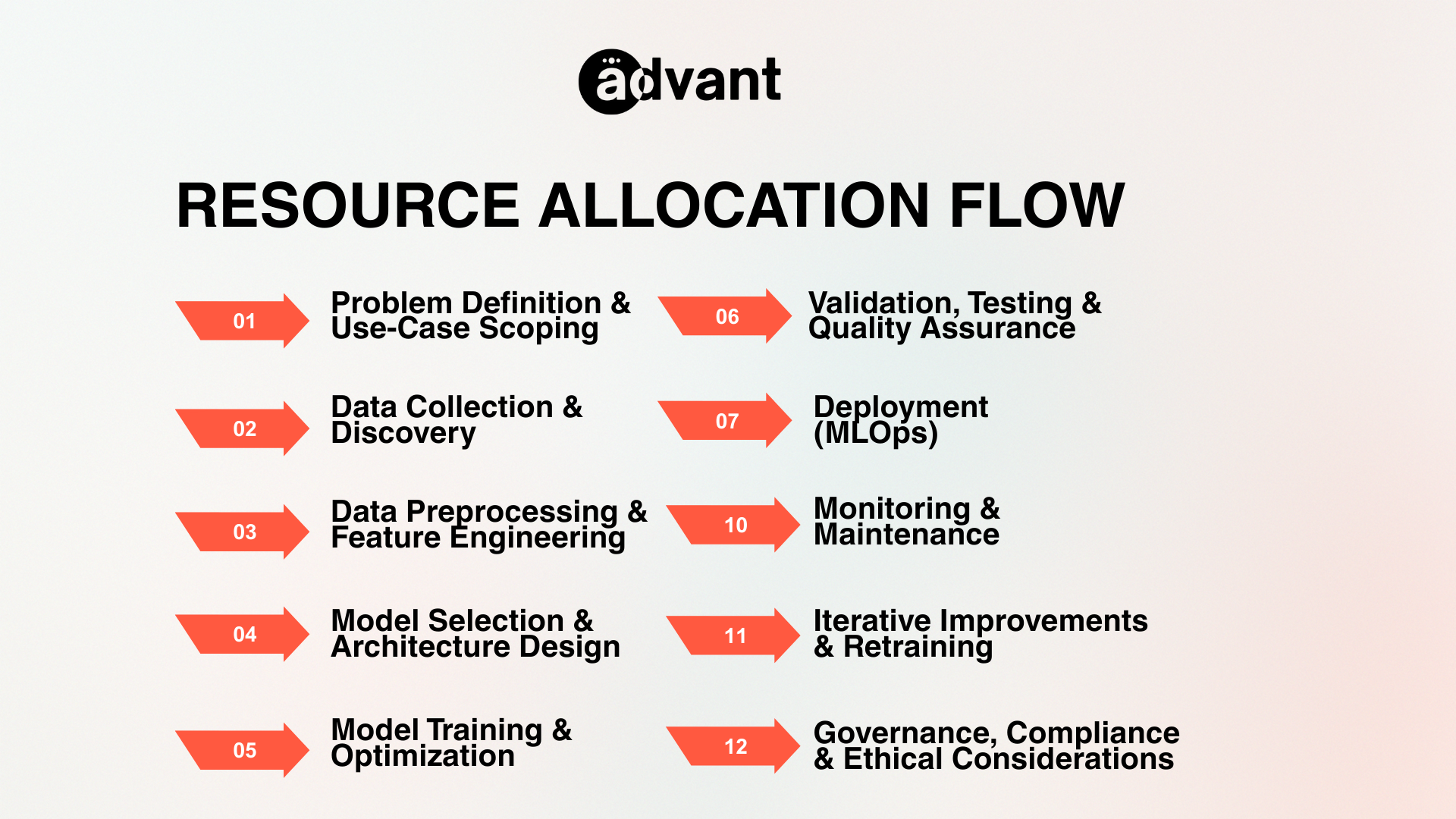
Key stages of the AI development lifecycle include:
Problem Definition – Clearly identifying the business problem and defining AI objectives.
Data Collection and Preparation – Gathering high-quality, relevant data and preprocessing it for training models.
Model Design and Development – Selecting appropriate algorithms and developing AI models tailored to the problem.
Model Training and Evaluation – Training models using datasets and evaluating their performance using metrics.
Deployment – Integrating AI models into production environments for real-world use.
Monitoring and Maintenance – Continuously tracking model performance and making iterative improvements.
This lifecycle is cyclical, not linear. Each stage feeds back into the others, emphasizing the importance of continuous refinement and learning.
2. Iterative Improvements in AI Development Lifeycle
AI systems are rarely perfect on the first attempt. Iterative improvement is a cornerstone of successful AI development, allowing teams to refine models, optimize performance, and adapt to changing conditions.
2.1 Why Iteration Matters
Adaptive Learning: AI models learn better over time with new data.
Error Reduction: Iterative testing helps identify and correct errors early.
Scalability: Continuous improvements make it easier to scale AI applications.
Business Impact: Incremental improvements directly enhance ROI and user satisfaction.
2.2 Techniques for Iterative Improvement
Feedback Loops – Collecting user feedback and model outputs to refine algorithms.
A/B Testing – Comparing different model versions to identify the most effective solution.
Hyperparameter Tuning – Adjusting model parameters to maximize performance.
Incremental Data Training – Continuously adding new data to improve accuracy.
By embracing iterative improvements, AI teams ensure their models remain relevant, accurate, and valuable in dynamic environments.
3. Modular Design in AI Systems
Modular design refers to structuring AI systems into independent, interchangeable components or modules. This approach simplifies development, enhances maintainability, and enables flexibility.
3.1 Benefits of Modular Design
Reusability: Modules can be reused across different projects, saving time and resources.
Scalability: New features can be added without overhauling the entire system.
Collaboration: Teams can work on different modules simultaneously, improving efficiency.
Fault Isolation: Issues can be identified and resolved in specific modules without affecting the entire system.
3.2 Common AI Modules
Data Processing Module – Handles data cleaning, transformation, and storage.
Model Training Module – Manages algorithm selection, training, and validation.
Inference Module – Processes real-time inputs and generates predictions.
Monitoring Module – Tracks model performance and alerts teams to anomalies.
Modular AI architectures also support plug-and-play functionality, allowing organizations to experiment with different models or data sources without disrupting core systems.
4. Integrating Iterative Improvements with Modular Design
The combination of iterative improvements and modular design creates a robust, adaptive AI system.
Iterative module updates: Each module can be updated independently, allowing faster iterations.
Parallel development: Teams can improve modules simultaneously while maintaining system stability.
Continuous integration and deployment (CI/CD): Integrating modular AI components into CI/CD pipelines enables rapid testing, evaluation, and deployment of improvements.
For example, in a predictive analytics system, the data preprocessing module can be updated with better feature extraction techniques without touching the model training module. Similarly, the inference module can adopt more efficient algorithms independently.
5. Best Practices for AI Lifecycle Management
Document Everything – Maintain detailed records of datasets, model versions, and experiments.
Focus on Data Quality – High-quality data is the backbone of AI performance.
Adopt Automation Tools – Utilize AI ops platforms, workflow orchestration tools, and version control systems.
Emphasize Ethics and Bias Mitigation – Ensure models are fair, transparent, and compliant with regulations.
Regularly Review and Audit Models – Conduct periodic performance reviews to prevent degradation.
Following these best practices ensures AI systems remain effective, reliable, and trustworthy.
6. Case Studies of Successful AI Lifecycle Management
6.1 E-commerce Personalization
An online retailer implemented a modular AI system for personalized recommendations. By iteratively improving the recommendation engine and updating the data processing module, the company increased click-through rates by 35% within six months.
6.2 Healthcare Diagnostics
A healthcare provider developed an AI diagnostic tool using modular design. Independent improvements to the model training module and continuous data integration led to a 20% increase in diagnostic accuracy over the first year.
These examples highlight the practical benefits of combining iterative improvements with modular AI design.
7. Tools and Technologies Supporting AI Lifecycle
Choosing the right tools is critical for a smooth AI development lifecycle, iterative improvements, and modular design.
Model Development: TensorFlow, PyTorch, Keras – enable rapid prototyping, modular model building, and easy iteration.
Data Management: Pandas, Apache Spark, Kafka – handle data cleaning, transformation, and real-time streaming.
Experiment Tracking: MLflow, Weights & Biases – track model versions, parameters, and performance for iterative improvements.
Workflow & CI/CD: Apache Airflow, Kubeflow, Jenkins – automate pipelines, deploy updates safely, and support modular components.
Deployment & Scaling: Docker, Kubernetes, AWS SageMaker – ensure scalable, reliable, and isolated AI module deployment.
Monitoring: Prometheus, Grafana, Evidently AI – detect model drift, monitor performance, and guide iterative updates.
Using these tools together ensures AI systems are scalable, maintainable, and continuously improving, while supporting modular and iterative workflows.
8. Challenges in AI Development Lifecycle
Despite its benefits, AI development comes with challenges:
Data Silos – Fragmented data can hinder model performance.
Model Drift – AI models may lose accuracy as real-world data evolves.
Resource Constraints – Training large models requires substantial computational power.
Integration Complexity – Modular components may face compatibility issues.
Addressing these challenges requires careful planning, continuous monitoring, and an agile development mindset.
9. Future Trends in AI Development Lifecycle
Automated AI – AI systems capable of self-optimization and automated updates.
Explainable AI (XAI) – Increasing demand for transparent, interpretable AI models.
Edge AI – Deployment of AI models closer to data sources for real-time processing.
Sustainable AI – Emphasis on energy-efficient models and green AI practices.
These trends will shape the future of AI lifecycle management, making iterative and modular approaches even more critical.
Conclusion
The AI development lifecycle, when combined with iterative improvements and modular design, provides a strategic roadmap for building high-performing, adaptable, and sustainable AI systems.
Organizations that embrace this approach benefit from faster deployment, improved accuracy, and scalable architectures.
By focusing on continuous refinement, modular components, and best practices, businesses can unlock the full potential of AI while ensuring long-term reliability, efficiency, and user trust.
Read More:How to Choose an AI Strategy Development Consulting Partner
FAQs: AI Development Lifecycle, Iterative Improvements & Modular Design
1. What is the AI development lifecycle?
Answer: The AI development lifecycle is a structured process used to design, build, deploy, and maintain AI systems. It typically includes stages such as problem definition, data preparation, model development, training, deployment, and ongoing monitoring. Unlike traditional software development, AI requires continuous iteration due to evolving data and real-world conditions.
2. Why are iterative improvements important in AI projects?
Answer: AI models naturally degrade over time due to changes in user behavior, market conditions, and data patterns. Iterative improvements allow teams to refine algorithms, retrain models with new data, and enhance performance regularly. This approach ensures accuracy, reliability, and long-term relevance.
3. How does modular design benefit AI development?
Answer: Modular design breaks an AI system into independent components—such as data preprocessing, model training, inference, and monitoring. This improves scalability, makes updates easier, enables parallel development, and helps teams isolate and resolve issues without impacting the entire system.
4. What tools support an iterative and modular AI workflow?
Answer: Tools like TensorFlow, PyTorch, MLflow, Kubeflow, Docker, and Kubernetes help streamline modular development, automate workflows, track experiments, and manage version control. These tools allow teams to integrate continuous improvement practices into their AI lifecycle efficiently.
5. How can businesses ensure their AI lifecycle meets ethical and compliance standards?
Answer: Businesses should adopt transparency practices, track model decisions, monitor bias, use explainable AI techniques, and regularly audit data pipelines. Documenting model versions, maintaining data quality, and using secure, compliant infrastructure also help ensure ethical and regulatory alignment throughout the lifecycle.